Introduction:
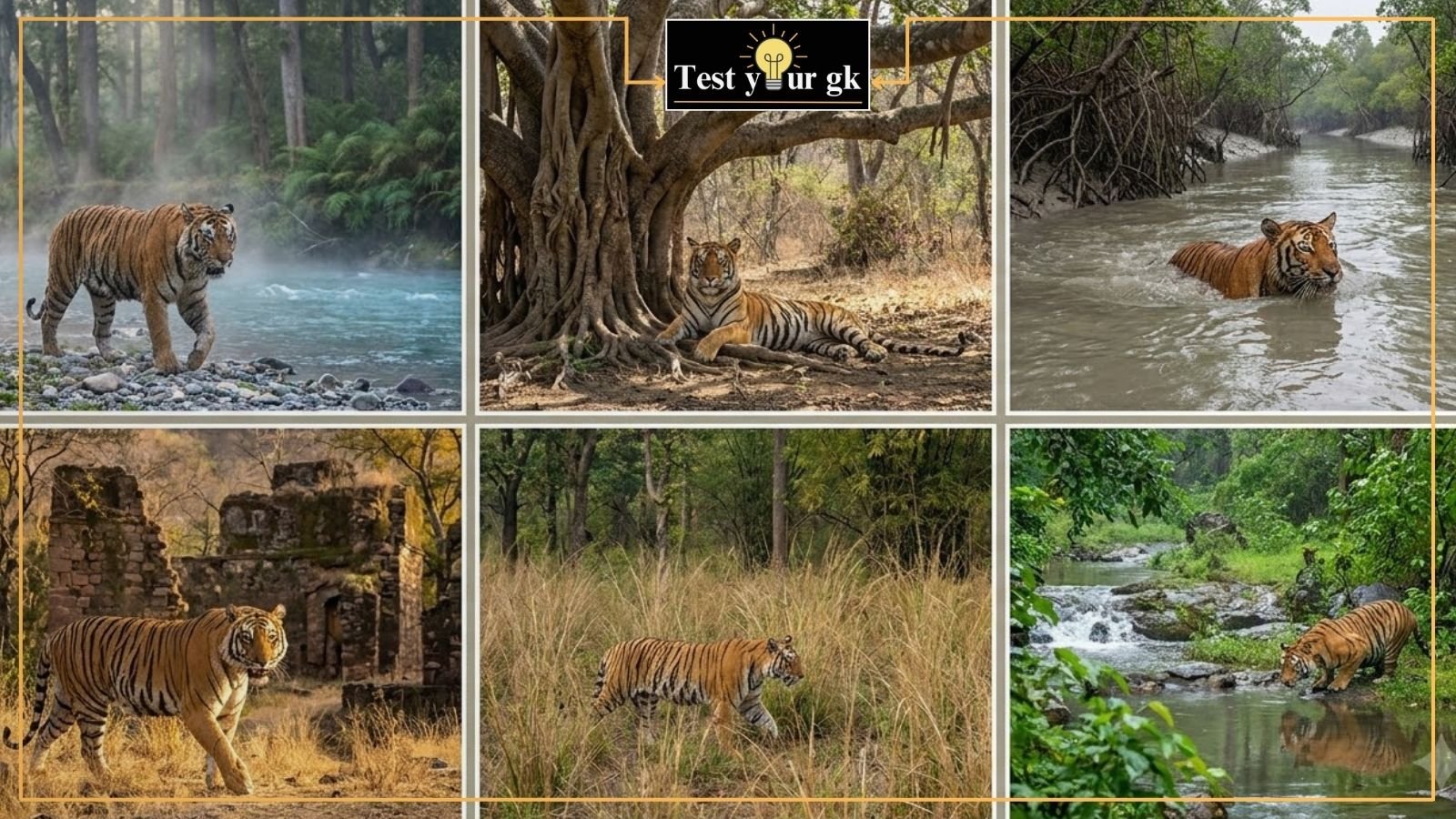
The Tiger is not just India’s National Animal; it is a symbol of the country’s rich biodiversity and its long-standing commitment to wildlife conservation. To protect this magnificent species from extinction, India launched Project Tiger in 1973, a landmark initiative that has since grown into one of the most successful conservation programs in the world. Today, India is home to 58 Tiger Reserves spread across 18 states, safeguarding not only tigers but entire ecosystems, water sources, and countless other species that share their habitat.
These reserves, managed by the National Tiger Conservation Authority (NTCA), are a vital topic for anyone interested in Indian geography, environment, and current affairs, and they frequently appear in competitive examinations such as UPSC, SSC, and various state-level PSC exams. This article offers a complete overview of India’s Tiger Reserves, along with essential facts every aspirant should know.
List of Tiger Reserves in India:
| Sr. No | Tiger Reserve | District | State |
|---|---|---|---|
| 1 | Corbett Tiger Reserve | Nainital, Pauri Garhwal | Uttarakhand |
| 2 | Melghat Tiger Reserve | Amravati | Maharashtra |
| 3 | Kanha Tiger Reserve | Mandla, Balaghat | Madhya Pradesh |
| 4 | Similipal Tiger Reserve | Mayurbhanj | Odisha |
| 5 | Manas Tiger Reserve | Baksa, Chirang | Assam |
| 6 | Palamau Tiger Reserve | Latehar | Jharkhand |
| 7 | Ranthambore Tiger Reserve | Sawai Madhopur | Rajasthan |
| 8 | Bandipur Tiger Reserve | Chamarajanagar | Karnataka |
| 9 | Sundarbans Tiger Reserve | South 24 Parganas | West Bengal |
| 10 | Periyar Tiger Reserve | Idukki | Kerala |
| 11 | Sariska Tiger Reserve | Alwar | Rajasthan |
| 12 | Buxa Tiger Reserve | Alipurduar | West Bengal |
| 13 | Indravati Tiger Reserve | Bijapur | Chhattisgarh |
| 14 | Namdapha Tiger Reserve | Changlang | Arunachal Pradesh |
| 15 | Dudhwa Tiger Reserve | Lakhimpur Kheri | Uttar Pradesh |
| 16 | Kalakad-Mundanthurai Tiger Reserve | Tirunelveli, Kanyakumari | Tamil Nadu |
| 17 | Valmiki Tiger Reserve | West Champaran | Bihar |
| 18 | Pench Tiger Reserve | Seoni, Chhindwara | Madhya Pradesh |
| 19 | Tadoba-Andhari Tiger Reserve | Chandrapur | Maharashtra |
| 20 | Bandhavgarh Tiger Reserve | Umaria | Madhya Pradesh |
| 21 | Panna Tiger Reserve | Panna, Chhatarpur | Madhya Pradesh |
| 22 | Dampa Tiger Reserve | Kolasib | Mizoram |
| 23 | Bhadra Tiger Reserve | Chikkamagaluru | Karnataka |
| 24 | Pench Tiger Reserve | Nagpur | Maharashtra |
| 25 | Pakke Tiger Reserve | East Kameng | Arunachal Pradesh |
| 26 | Nameri Tiger Reserve | Sonitpur | Assam |
| 27 | Satpura Tiger Reserve | Narmadapuram | Madhya Pradesh |
| 28 | Anamalai Tiger Reserve | Coimbatore, Tiruppur | Tamil Nadu |
| 29 | Udanti-Sitanadi Tiger Reserve | Gariaband | Chhattisgarh |
| 30 | Satkosia Tiger Reserve | Angul | Odisha |
| 31 | Kaziranga Tiger Reserve | Golaghat | Assam |
| 32 | Achanakmar Tiger Reserve | Mungeli | Chhattisgarh |
| 33 | Dandeli-Anshi Tiger Reserve | Uttara Kannada | Karnataka |
| 34 | Sanjay-Dubri Tiger Reserve | Sidhi | Madhya Pradesh |
| 35 | Mudumalai Tiger Reserve | Nilgiris | Tamil Nadu |
| 36 | Nagarhole Tiger Reserve | Mysuru, Kodagu | Karnataka |
| 37 | Parambikulam Tiger Reserve | Palakkad | Kerala |
| 38 | Sathyamangalam Tiger Reserve | Erode | Tamil Nadu |
| 39 | Mukundra Hills Tiger Reserve | Kota, Bundi, Jhalawar, and Chittorgarh | Rajasthan |
| 40 | Nawegaon-Nagzira Tiger Reserve | Gondia/ Bhandara | Maharashtra |
| 41 | Nagarjunsagar-Srisailam Tiger Reserve | - | Andhra Pradesh/ Telangana |
| 42 | Amrabad Tiger Reserve | Nagarkurnool | Telangana |
| 43 | Pilibhit Tiger Reserve | Pilibhit | Uttar Pradesh |
| 44 | Bor Tiger Reserve | Wardha | Maharashtra |
| 45 | Rajaji Tiger Reserve | Dehradun, Haridwar | Uttarakhand |
| 46 | Orang Tiger Reserve | Darrang | Assam |
| 47 | Kamlang Tiger Reserve | Lohit | Arunachal Pradesh |
| 48 | Sri Venkateswara Tiger Reserve | Chittoor | Andhra Pradesh |
| 49 | Biligiri Ranganatha Temple Tiger Reserve | Chamarajanagar | Karnataka |
| 50 | Kawal Tiger Reserve | Mancherial/Nirmal | Telangana |
| 51 | Sahydri Tiger Reserve | Western Ghats | Maharashtra |
| 52 | Ratapani Tiger Reserve | Raisen/Sehore | Madhya Pradesh |
| 53 | Ramgarh Vishdhari Tiger Reserve | Bundi | Rajasthan |
| 54 | Guru Ghasidas-Tamor Pingla Tiger Reserve | - | Chhattisgarh |
| 55 | Kanger Valley Tiger Reserve | Bastar | Chhattisgarh |
| 56 | Veerangana Durgavati Tiger Reserve | Damoh, Sagar, and Narsinghpur | Madhya Pradesh |
| 57 | Dholpur-Karauli Tiger Reserve | Dholpur | Rajasthan |
| 58 | Madhav Tiger Reserve | Shivpuri | Madhya Pradesh |
Quick Facts About Tiger Reserves in India:
- India currently has 58 Tiger Reserves, spread across 18 states.
- Project Tiger was launched in 1973 to protect the declining tiger population.
- The National Tiger Conservation Authority (NTCA) manages and monitors all Tiger Reserves in India.
- Tiger Reserves are notified under the Wildlife (Protection) Act, 1972.
- Each reserve has two zones:
- A core zone (no human activity) and
- A buffer zone (regulated activity permitted).
- Madhya Pradesh has the highest number of Tiger Reserves, with 9, earning it the title “Tiger State of India.”
- Nagarjunsagar-Srisailam Tiger Reserve, located across Andhra Pradesh and Telangana, is the largest Tiger Reserve in India by area.
- Bor Tiger Reserve in Maharashtra is the smallest Tiger Reserve in India.
- India is home to a large majority of the world’s wild tiger population, making it a global leader in tiger conservation.
- The All-India Tiger Estimation is conducted every four years and is considered one of the largest wildlife monitoring exercises in the world.
Conclusion:
India’s network of 58 Tiger Reserves stands as a testament to the country’s dedication to wildlife conservation. From the dense forests of Corbett in Uttarakhand to the vast landscapes of Nagarjunsagar-Srisailam in Andhra Pradesh, these reserves protect not just tigers but the delicate ecological balance of entire regions. With India now home to a majority of the world’s wild tiger population, the success of Project Tiger offers valuable lessons in sustainable conservation. For students preparing for competitive examinations, a clear understanding of these reserves, their locations, and their significance is essential, as this topic consistently features in the environment and geography sections of major exams.
Frequently Asked Questions (FAQs)
Q.1 How many Tiger Reserves are there in India as of 2026?
A) 54
B) 55
C) 58
D) 60
Answer: C) 58
Q.2 Which state has the highest number of Tiger Reserves in India?
A) Maharashtra
B) Karnataka
C) Uttarakhand
D) Madhya Pradesh
Answer: D) Madhya Pradesh
Q.3 Which organisation manages Tiger Reserves in India?
A) Ministry of Home Affairs
B) National Tiger Conservation Authority (NTCA)
C) Wildlife Institute of India
D) Forest Survey of India
Answer: B) National Tiger Conservation Authority (NTCA)
Q.4 Which zone of a Tiger Reserve is kept completely free from human activity?
A) Buffer zone
B) Eco-sensitive zone
C) Core zone
D) Transition zone
Answer: C) Core zone
Q.5 Under which act is Tiger Reserves notified in India?
A) Forest Conservation Act, 1980
B) Wildlife (Protection) Act, 1972
C) Environment Protection Act, 1986
D) Biological Diversity Act, 2002
Answer: B) Wildlife (Protection) Act, 1972
Found this guide helpful? Test your knowledge on other topics with our free quizzes at testyourgk.in, practice daily and stay exam-ready for UPSC, SSC, Banking, and State PSC exams!
For daily GK updates, competitive exam preparation tips, and important static GK PDF, Join our Telegram Channel.
📚 Preparing for UPSC, SSC, Banking, RRB or State Exams?
Follow Test your gk for daily General Knowledge updates, important exam questions, and free study resources. Also checkout our social media platform.
Stay connected
Join our community

2 thoughts on “List of Tiger Reserves in India 2026 | State-wise List, Important for UPSC, SSC & State PSC”